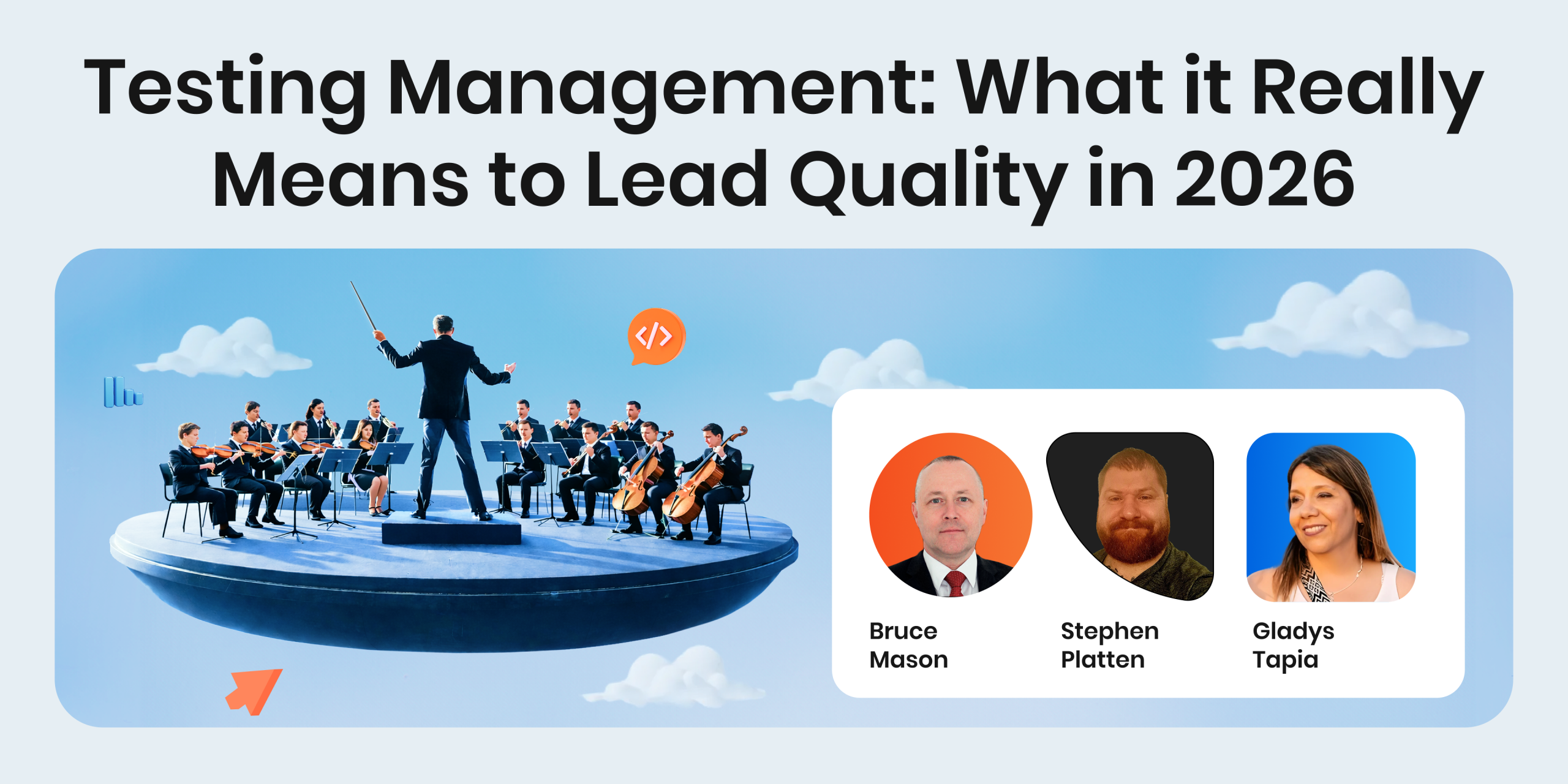
Our recent webinar on testing management and QA leadership skills brought together QA and delivery experts for an honest, experience-driven conversation. Rather than focusing on tools or frameworks, the discussion explored how leadership decisions, mindset, and team dynamics shape quality outcomes long before testing begins.
Here are some of the highlights from the webinar, plus a full recording at the end.
Testing Creates Value Long Before Code Even Exists
One of the strongest themes was that testing should begin at the requirements stage, not after development. Stephen Platten and Gladys Tapia both highlighted that requirements themselves are testable artifacts. Early testing helps include assumptions, gaps, and risks in the scope while changes are still cheap, even if the business impact is not always immediately measurable.
Early Testing Is About Achieving Clarity, Not Speed
Bruce Mason emphasized that involving testers early is less about accelerating delivery and more about creating a shared understanding. Validating requirements with stakeholders builds informed agreement on what success actually looks like, establishes a clear baseline, and secures buy-in before delivery pressure sets in.
Testers Naturally Connect Teams and Systems
Gladys Tapia described how testers often hold a unique, system-wide view of a product. By exploring both details and interactions across frontend, backend, data, and APIs, QA professionals frequently act as bridges between teams that do not regularly communicate, helping information flow and reducing hidden integration risks.
Testing Everything Is a Myth — The Real Focus Is the Risk
The idea of “fully testing” a system was openly and repeatedly challenged by our speakers. Stephen Platten and Bruce Mason both reinforced that testing is not about eliminating all risk, but about identifying it clearly. Test leadership means allowing stakeholders to make informed decisions, with risk ownership remaining firmly on the business side.
Leadership Behavior Needs to Create a Sense of Safety and Trust
A recurring point across all speakers was the importance of safety. Stephen Platten highlighted that teams improve only when they feel safe to admit mistakes and surface failures early. Quality assurance leadership and management that is built on the principles of accountability, openness, and consistency makes it easier for teams to raise concerns without fear.
Sustainable Workload Protects Both Quality and Judgment
Workload balance emerged as a critical leadership responsibility. Bruce Mason and Gladys Tapia discussed why leaving capacity for thinking, reviews, and risk discussion is essential. Sustained peak workload damages judgment and increases burnout, while a more sustainable pace supports better decision-making and consistent quality.
🔸🔹🔸
Missed the Webinar or Want to Go Back to Any Discussion Point?
The full recording is already available below ↘️
The webinar made one thing clear: testing management cannot be separated from leadership. Quality outcomes depend not just on what teams do, but on how leaders think, prioritize, and create space for trust, clarity, and informed decisions. These are the foundations of sustainable quality.
Jump to section
Hand over your project to the pros.
Let’s talk about how we can give your project the push it needs to succeed!